
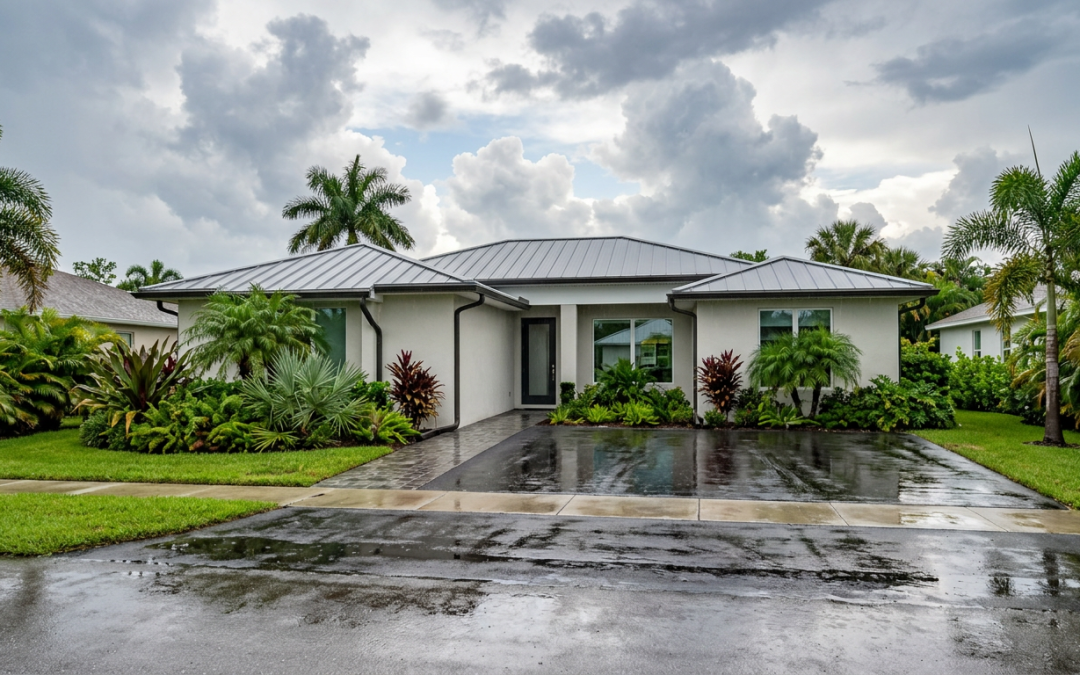
Protecting Rooflines and Foundations During Peak Atlantic Storm Season
Putting up gutters on a Florida residence is one of the most effective ways to shield structural foundations, fascia boards, and exterior landscaping from torrential tropical downpours. In Central Florida communities across Dade City, Tampa, and Lakeland, late-season autumn storms routinely drop several inches of rainfall within hours. Without a dedicated drainage channel, uncontrolled roof runoff cascades directly against exterior walls, eroding soil stability and triggering expensive foundation settling.
Executive Summary: Autumn in Florida brings intense rainfall and severe tropical moisture surges that quickly overwhelm unprotected residential rooflines. Putting up gutters with proper downspout extensions directs thousands of gallons of rainwater safely away from vulnerable foundation slabs and exterior siding. Investing in professional custom-fitted seamless gutters ensures long-term weather resistance, protects property values, and prevents costly structural rot.
Key Questions Answered:
- Why is putting up gutters critical for Florida homes? Gutters capture high-velocity roof runoff and redirect water away from delicate foundation slabs, preventing crawlspace flooding, soil trenching, and siding rot.
- When is the best time to install new gutters in Central Florida? Early autumn is ideal because it prepares your property before late-season tropical depressions and heavy rain bands arrive.
- Are seamless gutters better than sectional systems? Yes. Custom continuous aluminum channels eliminate seam leaks and withstand intense wind-driven rain much better than DIY segmented vinyl.
Key Takeaways for Homeowners
- Massive Water Diversion: A standard 2,000-square-foot roof sheds roughly 1,250 gallons of water for every single inch of rain, requiring high-capacity channels during tropical storms.
- Foundation Preservation: Directing stormwater at least 5 to 10 feet away from exterior walls prevents hydrostatic pressure buildup and slab cracking.
- Fascia and Soffit Protection: Properly mounted gutter systems keep moisture from splashing upward into wood framing, stopping wood rot and pest infestations before they start.
The Impact of Severe Autumn Downpours Across Central Florida
Central Florida experiences some of the highest precipitation concentrations in North America between June and November. As Atlantic hurricane season reaches its historical peak, afternoon thunderstorms merge with tropical low-pressure systems. Standard residential properties in Dade City, FL and Lakeland, FL frequently face sudden deluge conditions where rainfall rates exceed two inches per hour.
When rooflines lack functional water management systems, sheeting water gouges deep trenches into flowerbeds, strips away protective mulch, and pools around concrete footings. Over time, saturated soil expands and contracts unevenly, exerting lateral force against foundation walls. Incorporating seasonal exterior checks as outlined in standard fall property maintenance guidance ensures gutters and downspouts remain clear, secure, and ready to channel high-volume storm runoff away from structural components.
Putting Up Gutters in Practice: Step-by-Step Installation Standards
Proper gutter installation demands precise slope calculation, durable hardware, and secure fastening into structural fascia boards. Cutting corners on slope or fastener spacing causes standing water, sagging troughs, and system failure during heavy storms.
1. Precise Slope and Pitch Calibration
Water must flow steadily toward downspouts without stagnating in the trough. The standard installation formula requires a 1/4-inch drop for every 10 linear feet of gutter run. If a fascia line spans more than 40 feet, professional installers establish a center high point, pitching water outward in both directions toward dual downspouts.
2. Heavy-Duty Hidden Hangers and Fasteners
Central Florida weather demands robust structural anchoring. Instead of outdated exterior spikes that work loose over time, technicians install heavy-gauge internal screw hangers spaced every 24 to 30 inches along the run. In high-wind areas near Tampa, FL, hanger spacing is tightened to 18 inches near roof corners to resist wind uplift.
3. Downspout Sizing and Water Routing
Standard 2×3-inch downspouts frequently clog when handling large volumes of debris and water. Upgrading to oversized 3×4-inch corrugated aluminum downspouts doubles discharge capacity. Downspout outlets should connect to hinged splash blocks, underground drains, or pop-up emitters that deposit discharge well clear of foundation borders.
Sectional vs. Seamless Systems: Central Florida Comparison
Choosing the correct gutter system determines how well your exterior stands up to annual storm cycles. Below is a direct comparison of traditional DIY sectional gutters versus professionally fabricated seamless aluminum systems:
| Feature / Metric | Sectional Vinyl / Steel | Custom Seamless Aluminum |
|---|---|---|
| Leak Potential | High (joints every 10 feet weaken with heat and rain) | Very Low (continuous runs from corner to corner) |
| Storm & Wind Durability | Moderate; prone to separating at seams under load | High; rigid single-piece channels resist heavy wind gusts |
| Maintenance Needs | Frequent resealing and seam cleaning | Minimal; smooth interior prevents debris snagging |
| Expected Lifespan | 8 to 12 years | 20 to 30+ years with proper maintenance |
Tailored Solutions for Different Home Styles
Every home has distinct architectural factors that dictate gutter dimensioning and layout. Evaluating your specific property characteristics ensures your system performs reliably when severe weather strikes:
- Single-Story Ranch Homes: Standard 6-inch seamless gutters paired with 3×4-inch downspouts offer ample capacity for modest roof pitches while maintaining clean curb appeal.
- Two-Story and Multi-Level Residences: Upper-story drainage must never dump directly onto lower roof valleys. Dedicated downspout conduits bridge upper runs to ground level, protecting lower shingles from granular loss.
- Properties Under Heavy Oak and Pine Canopy: Homes surrounded by mature Central Florida trees benefit greatly from micro-mesh gutter protection guards to keep pine needles and Spanish moss from choking drainage troughs.
- Tile and Metal Roofs: Steep-pitch clay tile and standing seam metal roofs accelerate water velocity. Installing 7-inch commercial-grade troughs prevents fast-moving rainwater from overshooting gutter edges.
Why Choose Taylor Gardner Gutters & Exteriors
Taylor Gardner Gutters & Exteriors is a trusted, veteran-owned gutter company based in Dade City, FL, providing comprehensive exterior solutions across Hillsborough, Pasco, Hernando, and Polk counties. With an A+ Better Business Bureau rating, our skilled crews specialize in custom on-site seamless gutter fabrication, precision gutter repair, soffit and fascia replacement, and patio screen restoration.
Every project is built on transparent communication, premium materials, and dependable craftsmanship. As a veteran-owned business, we are proud to offer a 10% discount for veterans, active military personnel, and first responders, alongside competitive first-visit discounts to help local property owners protect their investments.
Frequently Asked Questions
How often should gutters be cleaned in Central Florida?
Central Florida properties should have gutters inspected and cleaned at least twice a year—once in late spring ahead of the summer rains, and once in late autumn following major leaf drops. Homes situated beneath heavy tree cover may require quarterly service.
What happens if you do not have gutters on a Florida home?
Without gutters, roof runoff erodes perimeter soil, damages flowerbeds, rots fascia boards, stains exterior stucco, and causes foundation settlement from concentrated water pooling along exterior footings.
Can gutters be installed on existing fascia boards?
Yes, provided the wood fascia is structurally sound and free from rot. Professional technicians inspect all fascia and soffit sections before installation and repair damaged wood framing to ensure hangers anchor firmly.
What size gutters work best for Florida downpours?
6-inch seamless aluminum gutters are the standard recommendation for Florida residences because they hold roughly 40% more water volume than traditional 5-inch troughs, preventing spillover during severe cloudbursts.
Conclusion
Preparing your home before severe autumn weather arrives is the most dependable strategy for avoiding structural water damage and foundation repairs. Putting up gutters with custom-measured continuous aluminum troughs ensures every downpour is directed safely away from your living space and landscaping.
Taylor Gardner Gutters & Exteriors delivers trusted residential and commercial gutter installations, maintenance, and exterior services throughout Dade City, Tampa, and Lakeland. Contact our dedicated team today to schedule your free on-site estimate and keep your home safe all season long.